This tool was developed by the MERSE project to help you measure and communicate the social value to stakeholders. Go to tool
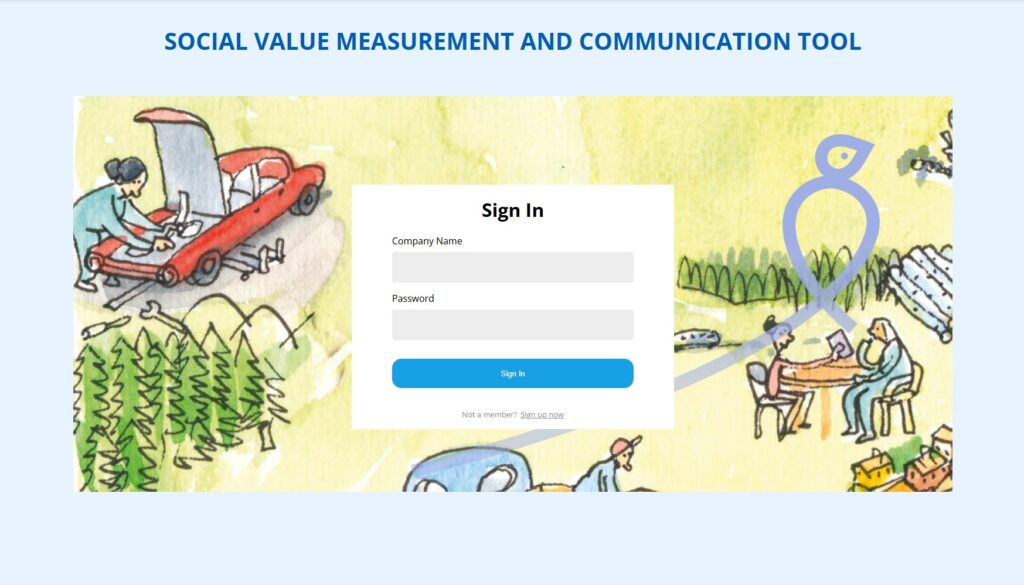
How to use the tool
Watch the video below to learn how the tool works. You can also download the instructions guide (pdf)
Background for developing the tool
Lack of clarity about the social impact and long-term savings in society has for a long time limited social enterprises’ sustainability. Assessing and communicating results and impact of the social value to stakeholders is repeatedly highlighted as a central challenge in the field of social entrepreneurship. Despite the various evaluation tools already excisting on the market, the adaptation to small social enterprises is poor and therefore difficult to use for those ventures.
The assessment and communication of social value is important from various perspectives. It’s about being able to attract users and financiers, but also to identify need for change in the own company.
Learn more about the background in this presentation (pdf)
Why measure social value?
Measuring performance and impact is often a major challenge in social entrepreneurship. In traditional businesses, results are usually calculated by comparing revenues and costs over a certain period. In social enterprises, however, value is often created through long-term benefits for society, such as reduced costs for healthcare, social services, or unemployment in the future. These kinds of effects are much harder to measure.
Social enterprises do not only benefit the people who directly use their services. Their activities often create positive effects for many other groups in society, such as public authorities, taxpayers, and local communities. This means that their work generates benefits that go far beyond the immediate transaction.
Even though many people agree that social entrepreneurship creates important value, it is often unclear how much value is actually created in measurable terms. This lack of clarity makes it harder for social enterprises to attract funding and to establish themselves in the market. For this reason, interest in finding ways to measure social impact has grown in recent years – not only to show outsiders what difference social enterprises make, but also to help them improve and maximize their positive impact.
The need for new tools to measure and communicate social value
Previous research shows that many different ideas and tools have been suggested for how social enterprises can measure the value they create. Even so, only a small number of social enterprises actually measure their social impact in practice. There is also limited evidence that the existing tools are widely used in everyday work. Because of this, the need for clear and practical ways to assess social impact is still very high and continues to grow. Many organizations and decision-makers want methods that can show what difference social enterprises really make. One of the main challenges in developing such methods is finding the right balance between being practical and being trustworthy. The method has to be simple enough to use without too much time or resources, but at the same time detailed enough to give meaningful and reliable results.
To meet this need, MERSE has developed a simplified online tool. The goal is to help small social enterprises measure and communicate the social value they create. This makes it easier for them to attract funding, improve their impact, and build long-term sustainability.
An overview of the Social value measurement and communication tool
The aim of the MERSE Social value measurement and communication tool is to help small social enterprises to 1) demonstrate their value to other stakeholders, 2) improve their impact and 3) enhance their sustainability. A key priority in the development process was to ensure that the tool is user-friendly, even for very small social enterprises. In addition, the tool is designed to generate informative reports that can be used both internally and externally to communicate results and impacts.
Summary
Small social enterprises are especially important in rural areas, where they often provide goods and services that the local community depends on. However, research shows that many social enterprises struggle to make a profit and to survive in the long run. One main reason is that it is often unclear what value they create. MERSE has therefore developed a simple online tool to help social enterprises explain and show their value more clearly. This is important for several reasons. Like traditional businesses, social enterprises see problems in society as opportunities to do something new. But unlike regular companies, their main goal is usually not to make money for themselves, but to create value for others. Because of this, social enterprises often cannot rely only on payments from their main target group. Instead, they need support from others, such as public actors, funders, or donors. This makes sense, since their work often benefits society as a whole. But if they cannot clearly show what value they create, it is hard to convince others to support them. That is why measuring and explaining social value is so important.
Another reason is that measurement can help social enterprises become better at what they do. By collecting and using data about their results, they can learn what works and what does not, and in that way increase their positive impact and their chances of long-term survival.
To really improve their effectiveness, social enterprises also need support that is adapted to their special situation. Research shows that having access to help with impact measurement makes it much more likely that social enterprises will actually measure their impact. At the same time, studies also show that many organizations that offer business support still lack enough knowledge about social enterprises and their needs. If this does not improve, there is a risk that social impact measurement will only work well in certain contexts and not be useful for everyone.